Bringing Monsters to Life

Sharpening with Sound
Audio is half the picture, or so the saying goes. But when cutting on legendary intellectual property like Netflix’s Frankenstein, sound is the lightning that wakes the beast up.
For this First Look featurette on Guillermo del Toro’s tentpole film, we teamed up with our partners at Dallas Audio Post to tackle the audio finishing mix. Short-form content like this presents a unique challenge: there is very little time to establish atmosphere, deliver critical dialogue, and leave a lasting impact. Here is how they stitched it all together.
Mastering the AAF Monster
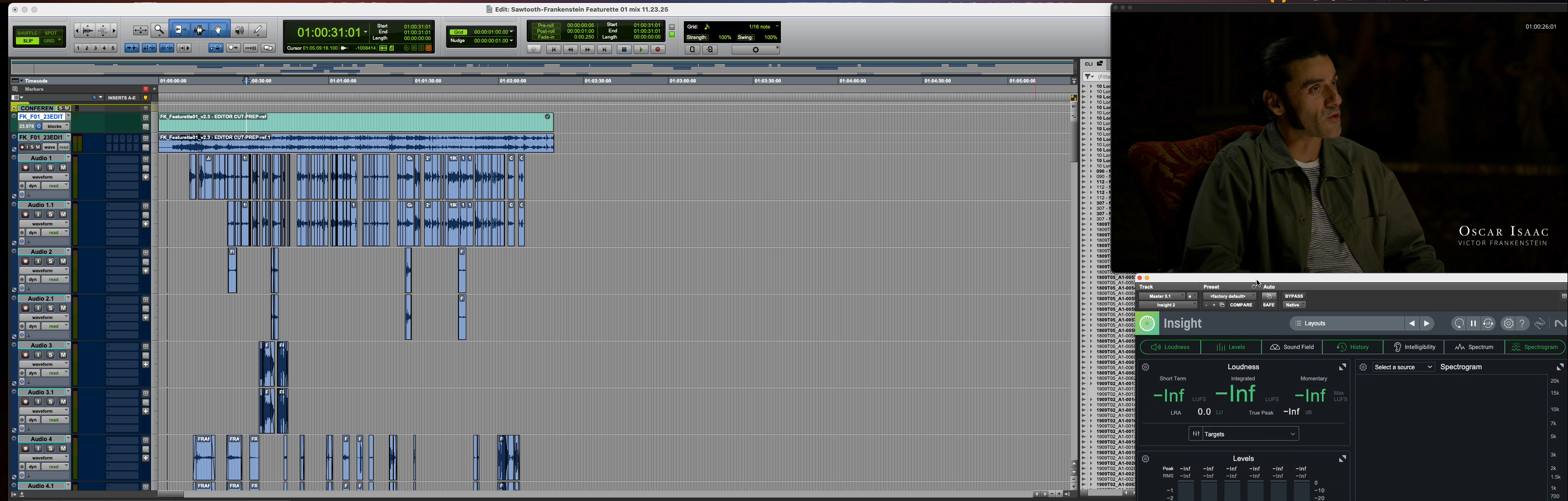
Every mix from Sawtooth starts with an AAF export of a cleaned up and properly prepped timeline. Once the AAF is ingested into ProTools, all audio elements get sorted into various groups – ambiences, hits, LFE (Low-Frequency Effects), dialogue, music, etc. This isn't just done for visual clarity, but because these groups are processed very differently further down the signal chain. Delicate room tone doesn’t need to hit the same compressor as slam and whoosh sound effects.
Dialogue Surgery
With the tracks organized, attention turns to the dialogue.
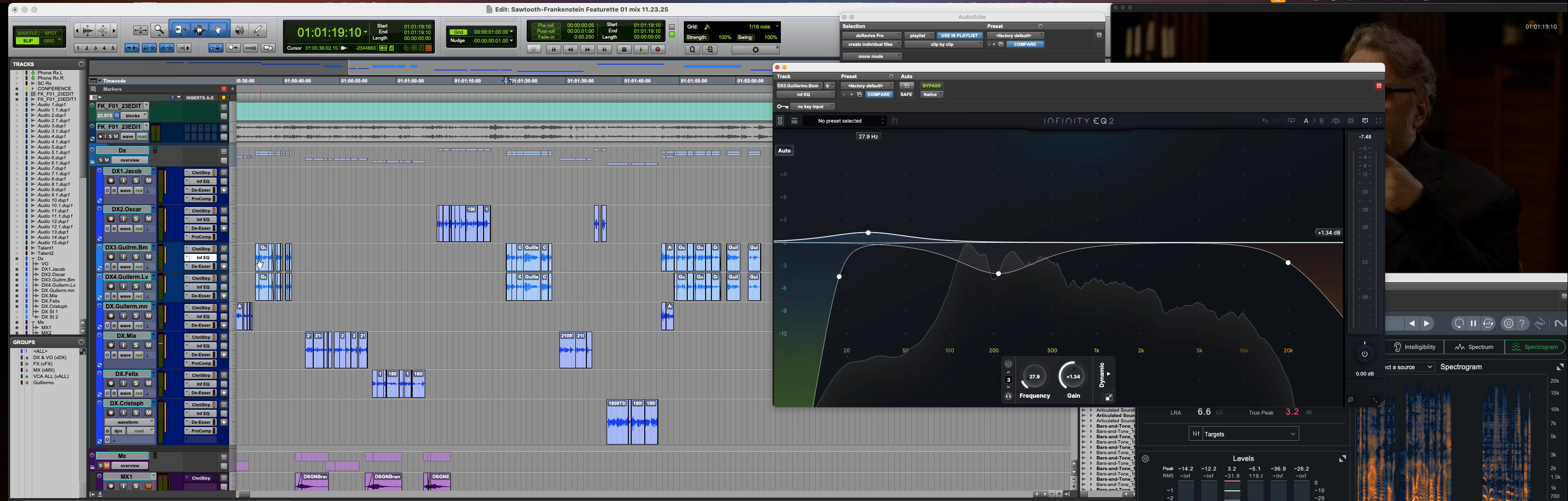
In a featurette, there is often a mix of on-set audio and sit-down interviews. DAP sorts the dialogue into actor-specific tracks, allowing for processing chains tailored to each person's unique vocal timbre.
Before applying any EQ or compression, however, the team does a fine-tuning pass on the dialogue edit itself, smoothing cuts, removing breaths, and ensuring the cadence feels natural. With the edit locked in, each person’s dialogue gets processed individually to ensure clarity and presence.
Building Atmosphere
Once the vocals have been polished, it’s time to layer in the intensity.
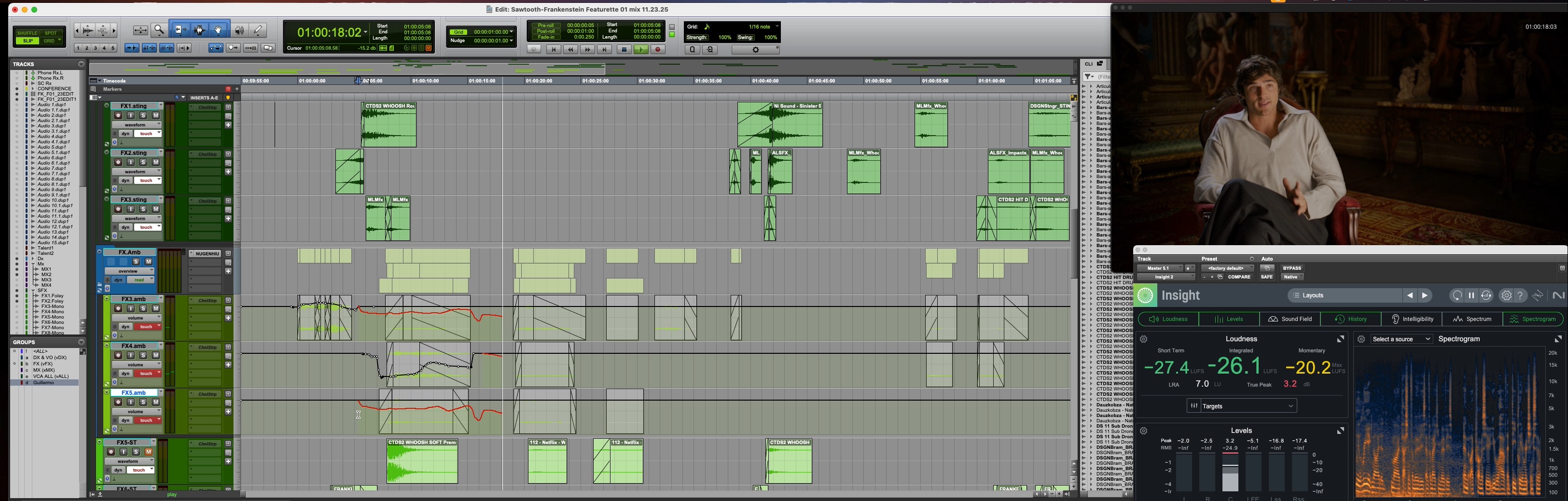
The process starts by volume riding each of the timeline’s sound effects individually against the dialogue. The goal here is balance; the SFX need to support the story, not trample it. Following that, the music levels get processed and ridden against the total context of the mix, ensuring the score drives the emotional beats without burying the interviews.
Carving Space with VCAs
Once the initial balance was set, a crucial second pass gets executed using VCAs (Voltage Controlled Amplifiers).
This is where the mix really comes together. By assigning the "groups" from the initial AAF ingest to VCA faders, DAP can easily duck music and effects to open up more sonic room for dialogue without losing the relative balance of the background elements. It’s this subtle nuance that ensures every word lands with the audience.

It's Alive!
After a little more polishing – checking transitions and smoothing out peaks – the project gets bounced, labeled, and passed back to the Sawtooth team to be conformed for final delivery.
Finishing a mix for a property like Frankenstein is a reminder that whether working on a 2-hour feature or a 2-minute featurette, the principles of good sound remain: organize, balance, and always make room for the story.
2-hour process in 5-minutes