

In-House vs. Rental vs. Outsourced Post

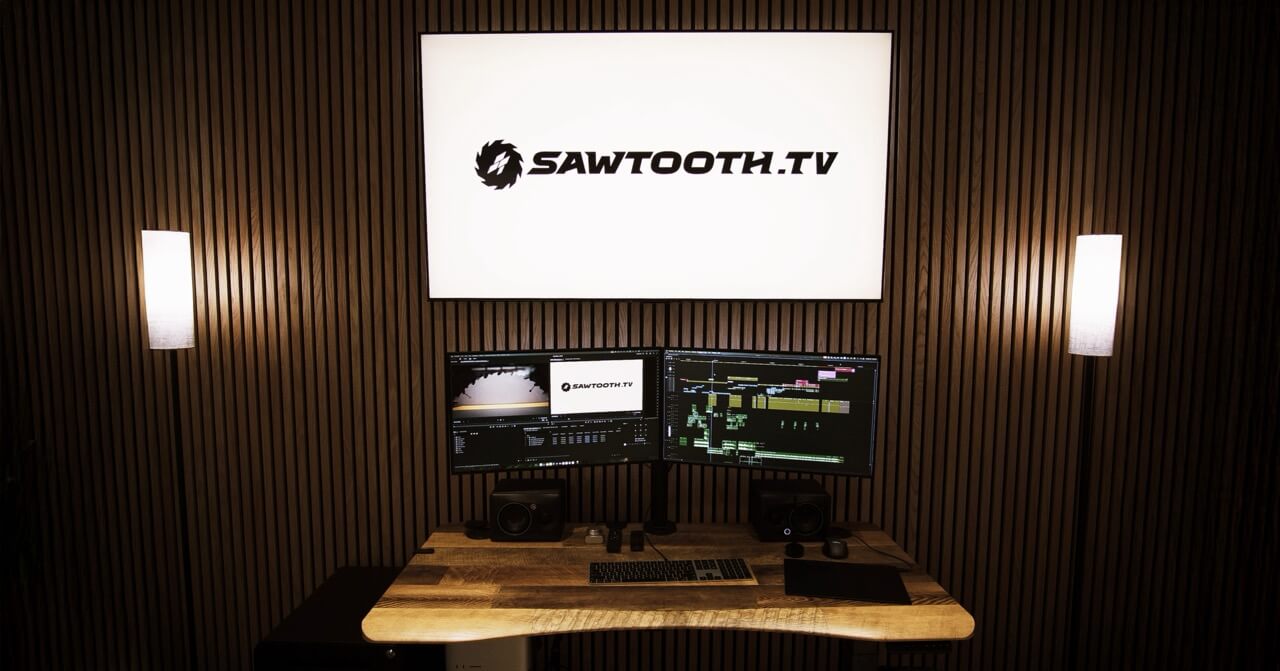
When to Build In-House, Rent a Suite, or Outsource
There are three approaches to handling post-production from an agency or brand perspective. Build an in-house department, rent an edit suite and infrastructure access on a project basis, or outsource the entire post-production process. The right choice comes down to two questions: how often does a production, agency, or brand need the capacity, and for how long?
Does Building an In-House Post Department Pay Off?
Building in-house means owning the infrastructure and there is more to a professional setup than YouTube tutorials might imply. For instance, it’s not just about the latest Macs. High-performance shared storage alone ranges from hundreds of dollars to tens of thousands depending on a post team’s demands and workload. Add NLE workstations, software licensing, and payroll, and the fixed cost adds up before a single frame gets cut.
In-house brings full control over configuration, with no per-project markup, and capacity that compounds across a slate of work. When the in-house post team is busy, the investment makes sense, but when the team is idle or when it’s stretched too far, that’s where in-house gets in trouble.
Even when editors are well-utilized, specific projects may require specialized security protocols or a project may call for a skill or style outside the in-house team's wheelhouse. The business is on the hook for an additional set of hired hands on top of what’s already on the books.
Is Renting an Edit Suite Cheaper Than Building In-House?
Renting converts an initial high fixed cost investment into a variable one based on project load. The expense gets spread out over time or absorbed project by project. For a timeline measured in weeks rather than years, the day-rate cost of a suite and its storage almost always undercuts the capital costs of building the same capability from scratch. There is no hardware to depreciate and no idle software licenses between jobs.
The tradeoff is control. A rented suite might be booked around another production's schedule and workflow standards also vary from one facility to the next in ways an in-house team might find frustrating. What renting buys back is flexibility. Scale up for a heavy offline editing week, scale down the next, without carrying the cost in between.
This model fits three situations best:
- Production companies whose in-house capacity is already booked and need overflow room.
- Non-local productions passing through a city, like Fort Worth, that need a collaborative color or edit suite, not just a portable setup in a hotel room.
- Brand or agency teams that need post capability without staffing it year-round.
Does a Production Give Up Anything by Outsourcing Post-Production?
What a production gives up is proximity. Same-day, walk-in access to the edit bay and the direct day-to-day oversight that comes with owning the room are gone. Outsourcing also depends on a vendor's availability and existing workflow discipline. The production is trusting someone else's infrastructure with material that may be under NDA or studio security review and they’re trusting the post-vendor’s ability to work with minimal supervision.
This outsourcing can work well, but finding experienced freelancers you can trust can be challenging. Still, it’s the simplest way to gain access to specialized workflows, like DaVinci Resolve color grading pipelines or Nuke VFX workflows, that would otherwise require a large in-house investment.
Outsourcing also tends to underperform for continuous, high-frequency output. A company shipping content every week may find that a full year of per-project outsourcing costs more than building internally would have. It is a strong fit for projects with a defined start and end, but works poorly for an operation that needs constantly needs quick turnarounds under short notice.
For short-term or single-project needs, yes. Renting avoids the capital cost of storage arrays, workstations, and software licenses. It converts post infrastructure into a day-rate expense that scales with actual use.
Yes. Suite, storage, and infrastructure access can be priced separately from editorial talent. This lets a production bring its own editor into a rented facility or hire talent independently of the room.
For high-volume, continuous output, building in-house typically becomes cheaper over time because the fixed cost is spread across more projects. For occasional or single-project work, outsourcing or renting usually costs less overall.
Direct day-to-day control over the edit bay and same-day, walk-in access to the work. Outsourcing means depending on a vendor's schedule and existing infrastructure rather than the production's own.